Retail & Revenue Diversification
Barbershop Retail: How to Sell Products in Your Shop
Walk into most barbershops and you will find product on the shelf.
Pomades, clippers, styling creams. Sometimes a full display. Sometimes just a few jars lined up near the mirror.
Walk out and ask the owner how much that product made last month. Most of the time, the answer is not much.
Not because retail does not work in barbershops. The data says it does, by a wide margin. But because most shops treat it like decoration and not revenue.
This guide covers what the numbers actually show, who retail works for, and how to build a shop where it happens consistently.
Why barbershop retail works
The barbershop has one advantage that almost no retail environment can match.
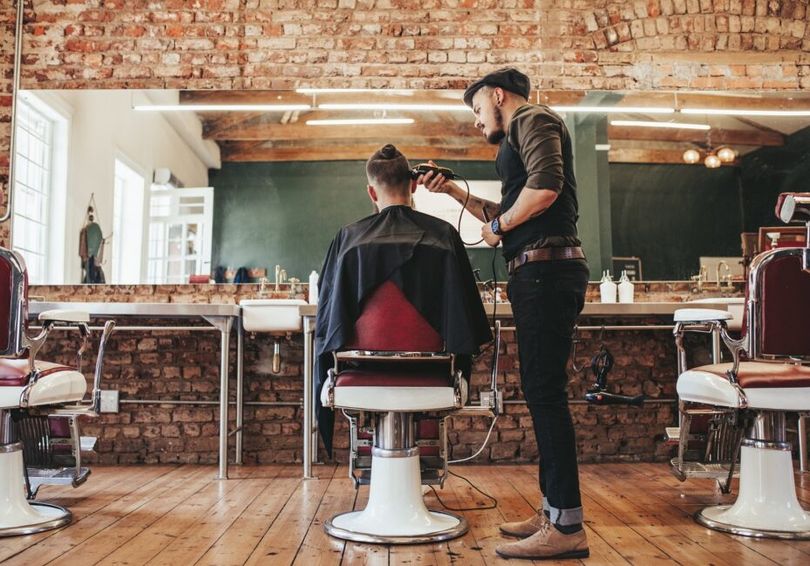
You demonstrate the product on the client before they decide to buy it. Forty-five minutes in the chair. They watched you apply it. They felt the result. They can see it in the mirror.
By the time the cut is done, the product has already made its case.
That is the retail opportunity in a barbershop. Not a display. Not a sign. Not a promotion. A demonstrated product that the client already knows works on their hair.
Most shops are not using it.
What the data shows
Among shops that sell retail, data shows a near-ten-times difference in performance based on one variable: how many chairs are making the ask.
When one barber in a shop sells retail, the overall attach sits under 1%. When every chair is selling, it hits 6%.
Same shop. Same clients. Same products on the shelf.
The gap between a median retail-selling shop and one in the top 10% is about five times: roughly $2,000 per year versus close to $10,000. The data points to the same explanation: chair participation.
And retail averages roughly 50% gross margin across shop sizes. It is additive. When a client buys a product, they pay for their service the same as always and the product on top. Nothing shrinks.
This is not a complex opportunity. It is a consistent behavior gap.
Who retail works for
Before going further, one honest scoping note.
Retail works cleanly in commission shops where the product sale flows through the shop point of sale and the revenue belongs to the business. In rental shops, a renting barber's product revenue is their own; it typically does not run through the shop POS and is not the owner's to count.
The numbers above, and the guidance in this hub, apply to commission barbershops. Roughly 300 to 1,200 tickets per quarter is where the data is strongest and the math makes the most sense for carrying inventory.
If you run a rental shop, the frame shifts: you can still build a retail culture and make product available, but the economics work differently. That is a separate conversation.
Three things that determine your retail revenue
Most shop owners think retail performance comes down to what you stock. The data says otherwise.
The three real drivers are simpler and more coachable.
1. What you stock and how you display it
The products you carry matter, but less than where they live and whether they look like they are for sale.
Product sells best when it is in the barber's hand during the service: not behind the counter, not in a locked case. The barber already demonstrated it. Station placement closes the gap between "what did you use" and a purchase.
For a full breakdown of how to build a retail section that actually moves product: what to stock, where to put it, which brands perform, and how to price for margin.
2. Whether the sell happens at the chair
Your highest-paying clients are already your most likely buyers.
Retail sales runs low on small tickets and 2 to 3 times higher on your biggest services. The client in for a full cut, a beard trim, and a hot towel is not a harder sell. They are a warmer one.
The moment is built into the service. The barber is already holding the product. The client is already watching in the mirror.
The gap is not demand. It is whether anyone mentions it.
A few simple approaches: timing the conversation, how to bring it up without it feeling like a pitch, and what to say when a client asks what you used.
3. How many chairs are doing it
This is the variable that moves the number most.
One chair selling retail in a five-chair shop barely registers in the data. Get every chair in, and the whole shop's attach rate goes up nearly ten times.
The reason most shops stall is that retail becomes one barber's habit instead of a shop standard. A client rotating between chairs gets a different experience depending on who cuts them that day. Some go home with product. Most do not.
Getting every chair consistent requires a short coaching framework: how to introduce it in team meetings, how to track by chair, and how to build it into the daily flow without it feeling like a sales quota.
That guide is coming soon. In the meantime, the fastest move is to pick one moment in your next team meeting and ask every barber to name the last product they used in a service and whether they mentioned it to the client.
The answer will tell you where you are.
What to do this week
You do not need a full retail overhaul to start.
Three things that move the number without a major lift:
Put demo product at the station. Keep one or two products within reach of the chair: what the barber is already using in the service. That is what gets picked up, mentioned, and sold. The rest of your display can stay where it is. The demo product needs to be at the chair.
Pick two products every barber already uses. Start with what is already in the shop. Two products everyone knows, applied daily, mentioned once per service. That is enough to build the habit.
Track it by ticket. You cannot coach what you cannot see. Knowing which chairs are selling and which are not turns a vague retail problem into a specific conversation.
How SQUIRE supports retail
SQUIRE tracks product sales by ticket, which means you can see attach rate by chair, by week, by service type.
That visibility is what turns a "we should sell more product" conversation into a specific one. Who is selling. Who is not. What is moving. What is sitting.
For shop owners building out retail, it is the difference between guessing and knowing.
FAQs
Retail is not a separate business inside your shop.
It is the product you are already applying, the client already watching, and a conversation that takes thirty seconds.
The shops doing it well are not running a sales operation. They have built one consistent habit across every chair.
That is the whole gap. And it is completely coachable.
1 article found. Page 1 of 1.