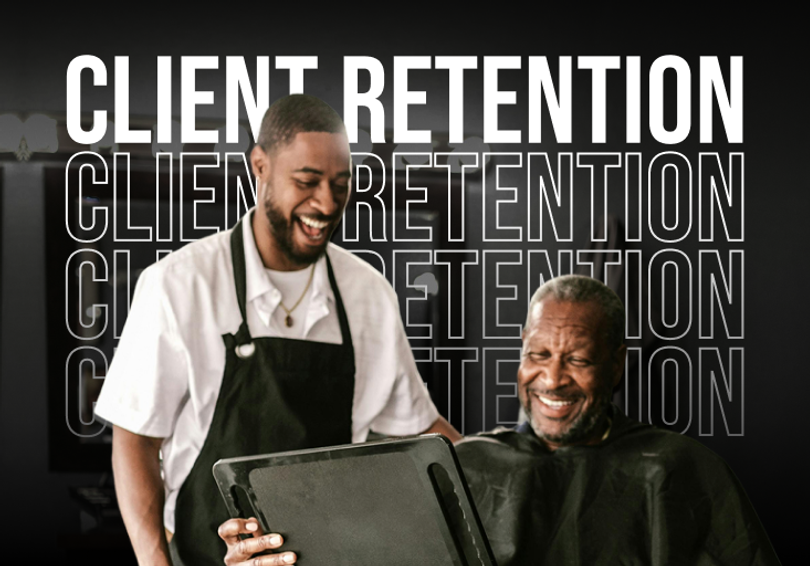
Tuesday, 2 PM. A client walks in a few minutes early. The chair's still warm from the last cut. The music is right. The space feels like somewhere they'd want to spend an hour.
That's not an accident.
Quality gets clients in the chair. The experience around it is what keeps them coming back.
Keeping clients loyal is one of the harder parts of running a shop. The barbers who do it consistently tend to follow the same handful of habits. Here are five of them, straight from the people who have built loyal books from the ground up.
1. Review your book before the day starts
Most of what keeps clients coming back never happens in the chair. It happens before the shop opens.
The barbers running the tightest operations build a pre-client prep routine: before the day starts, open the booking software. Check each client's product preferences and any sensitivities or allergies. Confirm the hot towel cabinet is running. Make sure every implement is ready before anyone sits down.
Nothing is left to the moment.
Carl Little owns three Las Vegas barbershops and has trained barbers for nearly five years through The Original Barber School. His take on why prep translates into retention:
Retention. That's where your relationships get built. You get to know them, they get to know you. Loyalty is built from relationships.
The practical version for any shop: before each day's appointments, open the book. Review who is coming in. Note what they've had before, what products they use, anything they've flagged. Two minutes per session. It changes what the client walks into.
SQUIRE client management keeps that history in one place, accessible to every barber before the appointment starts. So it does not depend on one person's memory or a sticky note on the mirror.
See how client management works in SQUIRE
2. Make every client feel like a regular from visit two
The barbers who build the deepest loyalty treat service history as something worth paying attention to. One client becomes a regular. One regular becomes a referral source. One referral source brings their whole crew.
The practical version of this is not complicated:
Know the service history. What did they get last time? How long ago? Did they mention they were growing it out?
Know the product preferences. Some clients hate anything in their beard. Some have sensitivities to certain products. Knowing that before they sit down signals that you were paying attention last time.
Know enough about their life to ask one real question. Not scripted small talk. An actual follow-up. "How did that event go?" or "How's the new spot treating you?" One question that proves you were listening.
Carl Little on one client he has had for years: "I know his shape, his texture, his relationships. Now I know where he works. I get perks. He works at a rental car spot. I want to see his kids grow up."
That client is now an investor in one of Little's locations. That relationship started in the chair.
3. Let your space do the talking before anyone sits down
The experience a client has when they walk in, before they even reach the chair, is part of the service. It either confirms that this is a shop worth returning to, or it does not.
A few things that move the needle:
Sound. Music sets the tone of a room faster than anything else. Pick something intentional. Keep it consistent. A shop that always sounds the same feels stable.
Scent. Clean, warm, product-adjacent. Clients notice a shop that smells like a shop. They also notice one that does not.
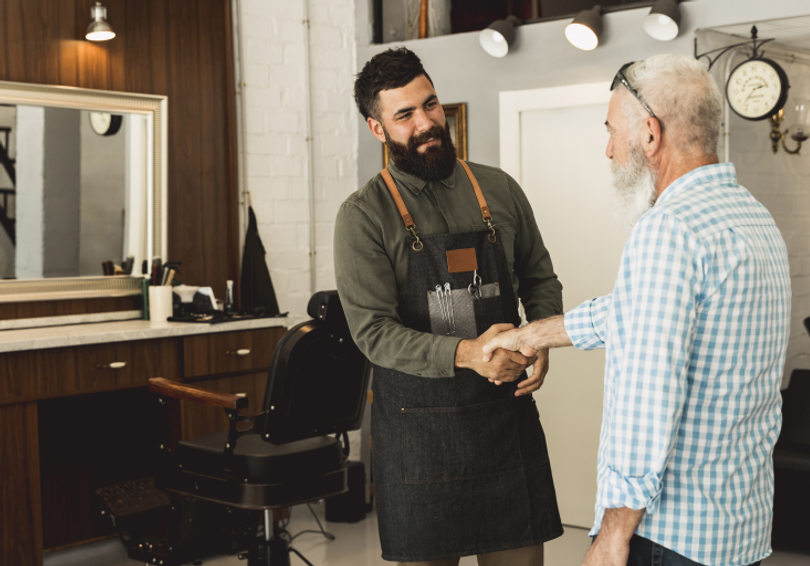
Walk-in greeting. Every person who walks through the door should be acknowledged within 30 seconds. During a rush, that can be a nod and "give us about fifteen." The alternative is a client who stood there for two minutes and left.
Chair-side attention. Remembering a preference, a name, a detail from last time. These are the moments that turn a first-time client into a regular.
4. Build a walk-in system that feels fair to everyone
Walk-in management is an experience problem most shops treat as a logistics problem.
The shops that handle it best have clear protocols: no barber looks aggressive with walk-in clients, and no walk-in feels like they interrupted. The system is fair and consistent, and clients can sense that.
The corollary: booking access matters. If clients cannot find an open slot, or can only book during business hours, or hit a voicemail that nobody checks, the experience has already failed before they arrive.
Clients who manage their own schedules expect to book on their time. That means 11pm on a Sunday if that is when they think of it.
For more on keeping your book full and reducing gaps, see How to Reduce No-Shows at Your Barbershop.
5. Build for retention, not just new
I don't want a job. I want a career. When you make it transactional, it becomes a job, not a passion.
clients
The math is straightforward. A retained client refers. They bring their kids. They become the person who tells their coworker, their cousin, their neighbor.
Carl Little on why retention has to be the goal from day one:
I don't want a job. I want a career. When you make it transactional, it becomes a job, not a passion.
New clients require effort to find and convert. Retained clients send you more clients. The compounding is significant, and it starts with the experience in the chair, before the chair, and around it.
Retained clients don't disappear overnight. Why barbershop clients stop coming back covers the rebooking and booking-system side of the equation.
FAQs
There are other shops in your city. Your clients have options.
The ones who keep coming back are loyal to the experience you have built around the cut.
See how SQUIRE helps you build and track those client relationships
Ready to try SQUIRE?