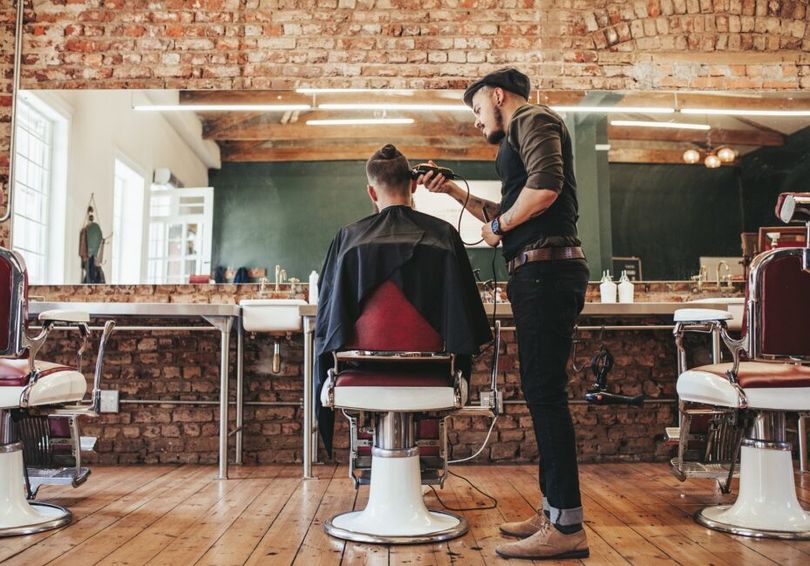
Most barbers who decide to open their own shop know the craft. The part that feels uncertain is the business side - the plan, the numbers, the structure. This guide covers what a barbershop business plan needs to include, what lenders and investors actually want to see, and how to build one that holds up in the real world.
What does a barbershop business plan include?
A complete barbershop business plan covers six areas:
Executive summary - A one-page overview of your shop concept, target market, business model, and funding request. Write this last, even though it appears first.
Market analysis - Who your clients are, where they are, and who you're competing with. (See market research guidance below.)
Business structure and model - Whether you're operating as an LLC or sole proprietor, and whether your shop runs on booth rental or commission. Both decisions affect your taxes, liability, and how you pay barbers. (See the booth rental vs. commission breakdown below.)
Operations plan - How the shop runs day to day: hours, staffing, booking system, payment processing, and client management.
Financial projections - Startup costs, monthly operating expenses, projected revenue, and break-even timeline. This is what lenders look at first.
Funding request - If you're seeking financing, specify how much you need, what it will be used for, and how you plan to repay it.
If you’re ready to open your own barbershop, you’re likely already familiar with the two primary business models these establishments frequently use. Before starting your shop, you’ll need to choose between a booth rental vs commission-based structure:
Booth rental or commission - which model goes in your plan?
Before you can complete your financial projections, you need to choose a business model. The two standard structures in barbershops are:
Booth rental - Barbers pay a fixed weekly or monthly fee for the right to work from your shop. Once they've covered that fee, everything else they earn is theirs. Your income is predictable; your upside is capped by the number of chairs you can fill.
Commission - Barbers receive a percentage of what they earn from services, typically a 60-40 or 70-30 split in the barber's favor. Your revenue scales with the shop's overall performance. Payroll is more variable but your ceiling is higher.
Both have trade-offs. The right choice depends on your market, your risk tolerance, and the type of barbers you want to attract. See the full breakdown of booth rental vs. commission before committing either to your plan.
Note: some states prohibit booth rental arrangements. New Jersey and Pennsylvania are two examples. Confirm what's permitted in your state before building your financial model around it.
How much does it cost to open a barbershop?
This is the question your business plan needs to answer with real numbers. Startup costs typically fall into these categories:
- Lease deposit and first month's rent (varies significantly by market - research comparable retail rents in your area)
- Barber chairs and equipment ($300-$1,500 per chair, depending on quality)
- Mirrors, stations, and shop fit-out
- Initial product inventory
- Signage and branding
- State barber license fees and business registration
- General liability insurance and workers' compensation
- POS system and booking software
- Working capital reserve (typically 3-6 months of operating costs)
Total startup costs for a single-location shop commonly fall between $75,000 and $150,000, though this varies widely depending on location, build-out requirements, and whether you're taking over an existing space. Build your own estimate line by line - a plan with real numbers is more credible to a lender than a round figure.
For ongoing monthly operating costs, your plan should project rent, barber compensation (under whichever model you choose), insurance, platform fees, supplies, and marketing spend against your projected revenue.
How to research your local market
A strong market analysis section answers three questions: Is there demand? Is the market saturated? Can you capture enough of it to be profitable?
Practical methods:
- Google Maps search for barbershops within a 2-mile radius of your target location. Count the competition and note their pricing.
- Check what barbers charge in comparable US cities to establish a pricing benchmark before you set your own rates.
- Look at Google Reviews volume and recency for nearby shops. High review counts with recent activity signals healthy demand; sparse reviews may indicate a slower market or a shop that hasn't invested in its online presence.
- US Census Bureau data for your target zip code gives you household income and population density - both correlate with barbershop spending patterns.
What business structure is right for a barbershop?
The most common choices for a new shop are sole proprietorship, LLC, and S corporation. Each has different implications for taxes, personal liability, and how you pay yourself. See the full guide to business structures for barbers before making this decision - it's one of the steps that should happen before you sign a lease.
How to fund a barbershop
Unless you're self-funding, you'll need to present your business plan to a lender or investor. The most common financing options for new shop owners:
SBA loans - The U.S. Small Business Administration backs loans through participating lenders. Rates are competitive and terms are long, but the application process is documentation-heavy. Your business plan is the central document.
Small business loans - Traditional bank or credit union loans. Faster than SBA in some cases but typically require established credit and collateral.
Lines of credit - Revolving access to capital up to a set limit. Useful for managing cash flow in the early months rather than funding the initial build-out.
Friends, family, or investors - Common for first-time owners. Formalize any arrangement with a written agreement regardless of the relationship.
One practical note: your financial projections section needs to show a credible path to repayment. Lenders are less interested in the vision than in the numbers behind it.
What regulations apply to barbershops?
- Licensing and compliance requirements vary by state. Before finalizing your plan, confirm:
- State barber license requirements and costs for you and any employed barbers
- Whether booth rental is legally permitted in your state
- Local business registration and zoning requirements
- Health and sanitation inspection requirements
See the full guide to getting a barber license for state-by-state requirements.
On the insurance side: general liability, professional liability, and workers' compensation are the three policies most barbershop owners carry. If you're in a booth rental arrangement, confirm whether your barbers are responsible for their own coverage or whether yours extends to them.
Tax note: if your shop purchases wholesale product for resale, a reseller license may exempt those transactions from sales tax. Worth confirming with an accountant before your first supply order.
Hiring barbers for your shop
Your team is the product. When hiring, evaluate:
Experience level - Entry-level barbers cost less and can grow with your culture; experienced barbers bring their own clientele. Most shops carry both.
Clientele size - A barber with an established book reduces your ramp time. Ask about it directly.
Fit with your shop's culture - Clients return for the person as much as the haircut. Personality and professionalism matter.
For guidance on what to look for and how to evaluate candidates, see how to add the right barber to your shop.
What technology does a barbershop need from day one?
Your operations plan should specify how the shop handles booking, payments, barber payouts, and reporting. These aren't afterthoughts - they affect your projected costs and your day-to-day workload.
SQUIRE is built specifically for barbershops. For new shop owners, the relevant capabilities are: online booking with no-show protection, card-on-file payments, commission tracking and Auto Payout to individual barbers, reporting that gives you visibility into each chair's performance, and Google Reviews Booster to build your review count from the first week.
The platform cost is a legitimate line item in your startup budget and ongoing operating plan. It replaces the equivalent of multiple tools a generic business would need to patch together.
Just because you’re setting up a brick-and-mortar business doesn’t mean you can’t benefit tremendously from the use of tech-based tools.
SQUIRE is the premiere barbershop management platform that empowers you to run your business efficiently and effectively. This is because SQUIRE gives new barbershop owners all the resources they need to succeed, keep staff and clientele happy, and stay in compliance. These features include:
- Consistency in data and reporting
- Seamless scheduling and payouts
- Membership and loyalty programs
For true efficiency and success, you need a system that goes beyond just booking. With SQUIRE, you can accomplish the work of multiple employees and countless hours of labor with just one platform.
FAQ section
What should a barbershop business plan include? A complete barbershop business plan covers an executive summary, market analysis, business model and structure, operations plan, financial projections, and funding request. The financial projections section - covering startup costs, monthly operating expenses, and break-even timeline - is what lenders review first. Every other section supports the credibility of those numbers.
How much does it cost to open a barbershop? Startup costs for a single-location barbershop typically fall between $75,000 and $150,000, depending on location, build-out requirements, and equipment choices. Major line items include lease deposit, chairs and stations, initial inventory, licensing fees, insurance, and working capital reserve. Build a line-by-line estimate rather than using a round figure - lenders respond to specifics.
Do I need a business plan to open a barbershop? Not legally - but you need one if you're seeking financing, and you benefit from one either way. A business plan forces you to model your costs and revenue before committing capital. Shops that open without one are more likely to underestimate startup costs and overestimate early revenue. Even a lean one-page plan is better than none.
What's the difference between booth rental and commission in a barbershop? In a booth rental model, barbers pay a fixed weekly or monthly fee to use a chair - everything they earn above that is theirs. In a commission model, the shop takes a percentage of each barber's service revenue, typically 30-40%. Booth rental gives you predictable income; commission gives you upside tied to the shop's overall performance. Some states prohibit booth rental, so confirm local regulations before choosing.
Opening a barbershop is a serious business decision - and a business plan is how you make it on your terms rather than figuring it out as you go. SQUIRE gives new shop owners the tools to run the operation from day one.
Ready to try SQUIRE?