Plenty of barbershop owners run cash-heavy on purpose. No processing fees, no monthly software cost, money in hand at the end of the day. On paper it looks like the lean choice.
In practice, running without a real point-of-sale system costs you in ways that don't show up until you look for them: clients who don't carry cash and quietly go elsewhere, hours lost every week to manual money management, and a business with no financial record when you need one for a loan, a lease, or a sale. Here's the full picture.
Why your clients aren't carrying cash
Most of your clients would rather not pay cash - and a growing share simply can't. In the US, 41% of adults say they never use cash in a typical week, up from 29% in 2018. Among adults under 50, more than half say they rarely or never carry cash at all.
For a cash-only shop, that means a meaningful slice of potential clients hit friction before they ever sit in your chair. They have to find an ATM, pay a withdrawal fee right before paying you, or skip your shop for one that takes a card. Every "Cash Only" sign in a window is a filter - and you never see the clients it turns away.
What cash-only is costing you in time
Running on cash without a barbershop POS system means managing money by hand: counting drawers, collecting booth rent, calculating commission splits, making change, running deposits. Individually small; collectively, hours every week.
Some shop owners spend close to 10 hours a week just calculating commission payouts manually. That's a full workday lost to arithmetic a system could do instantly. Time spent reconciling cash is time not spent building the business, training barbers, or stepping back from the chair.
What you can't do without a POS system
The least visible cost of cash-only is opportunity. Without clean transaction records, certain doors stay closed:
- Financing. Loans and lines of credit require documented revenue. A cash business with no POS record struggles to qualify - which means no cushion for slow seasons and limited capital for expansion.
- Personal lending. If your income runs through an under-the-table cash operation, mortgages and auto loans get harder to secure.
- Business visibility. Without a POS tracking every transaction, you can't easily answer basic questions: Which barber is underbooked? Which retail products move and which sit? Are you retaining clients or losing them? You end up making decisions on incomplete information and trusting that everyone's reporting honestly.
A cash-only shop isn't just harder to run today. It's harder to grow, fund, or eventually sell.
What to look for in a barbershop POS system
Not all POS systems are built the same. General-purpose systems like Square process cards competently but aren't designed for how a barbershop actually operates - they treat you like any retail counter. The question with a generic system is "how much will it cost me." The question with a barbershop-specific system is "how much is it costing me not to have it."
A POS built for barbershops should handle:
- Card payments with transparent processing rates
- Commission tracking and automatic payouts to individual barbers
- Booth rent collection
- Real-time reporting on revenue, retention, and barber performance
- Inventory and retail tracking
- Integration with booking, so payments and the schedule live in one system
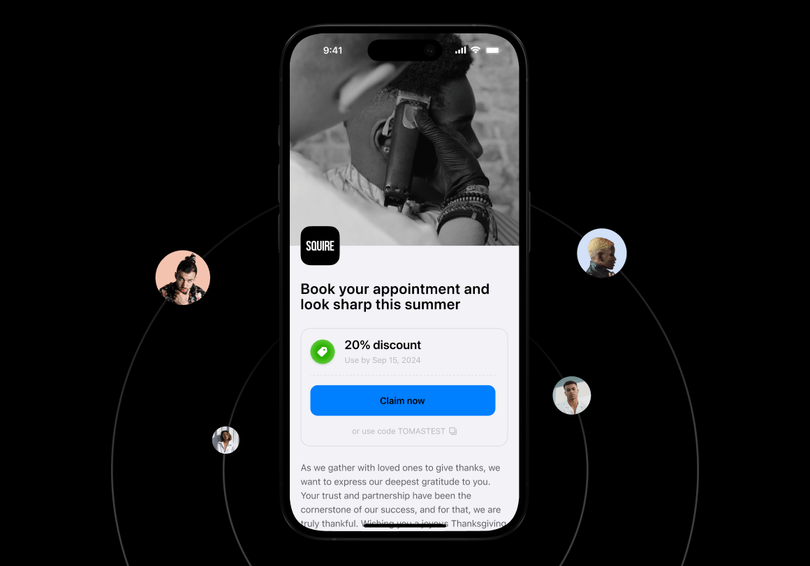
SQUIRE is built specifically for barbershops. Card-present processing runs at 2.5% + $0.20 per transaction, with Auto Payout for commissions and Rent Collect handling the money management that otherwise eats your week. Plans start at $30/month - and because it's all-in-one, it replaces the stack of separate tools a generic setup would require.
This is about more than a card reader. A barbershop POS is the difference between processing payments and actually running your shop on more than a booking app.
SQUIRE handles the commission math, rent collection, and payment processing that cash-only shops do by hand. Book a demo to see the reporting for yourself.
FAQs
Do barbershops need a POS system? A barbershop can operate on cash alone, but it gives up the ability to accept the cards most clients prefer, loses hours each week to manual money management, and has no financial record for loans or business valuation. A POS system built for barbershops also handles commission payouts, rent collection, and reporting - functions a cash drawer can't.
What's the best POS system for a barbershop? The best POS for a barbershop is one built specifically for how shops operate - not a general retail system. Look for transparent card processing, commission tracking and automatic barber payouts, booth rent collection, and integrated booking and reporting. General systems like Square process cards but aren't designed for commission splits, booth rent, or barbershop reporting.
Should a barbershop accept credit cards? Yes, for most shops. With 41% of US adults never using cash in a typical week and over half of under-50s rarely carrying it, a cash-only policy turns away clients who would otherwise book. Card acceptance also tends to increase tips and removes the ATM-fee friction that sours the end of an appointment.
How much does a barbershop POS system cost? Costs vary by platform and features. SQUIRE plans start at $30/month, with card-present processing at 2.5% + $0.20 per transaction. The more useful question is what cash-only costs in lost clients, hours of manual money management, and inability to qualify for financing - which for most growing shops exceeds the price of the system.
Accepting cards and running a real POS is a meaningful change, and the upfront cost is easy to focus on. The harder number to see is what cash-only is already costing you in clients, time, and the options you don't have. SQUIRE gives shop owners the payments, payouts, and reporting to run the business on more than a cash drawer.
Ready to try SQUIRE?