Your rating isn't what's holding back your local rankings.
Google ranks local results partly on review volume. A shop with 50 reviews and a 5.0 loses to a shop with 300 reviews and a 4.8 every time. Volume is a structural advantage the algorithm can measure. Work quality isn't.
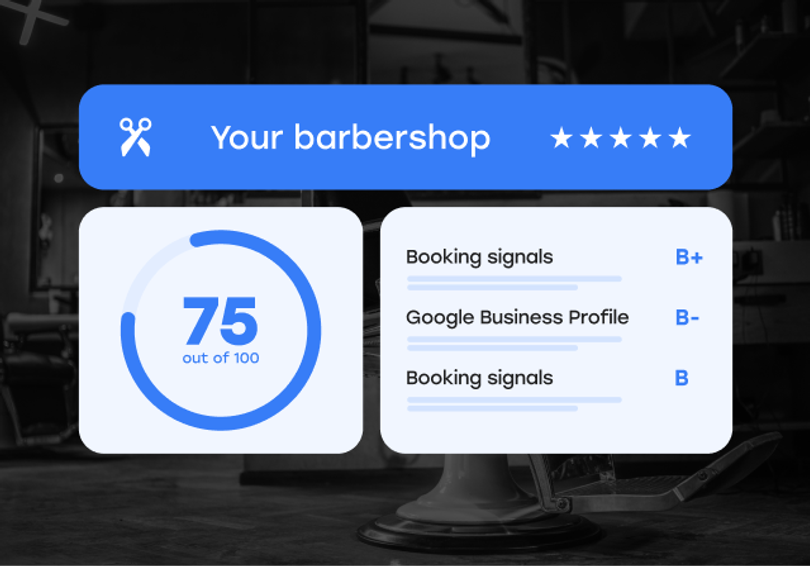
If your Review Signal score came back flagged, that's almost always the gap. Reviews are one of six categories in your score. For the full picture, start with what each Visibility Report check reveals.
What the Review Signal score actually measures
The Review Signal category checks four things at once: total review count, recency, average rating, and response rate.
A shop can have a strong rating and still get flagged because the last review came in four months ago. A shop can have 200 reviews and still get flagged because half of them have no response. The score is measuring the health of your review presence as a system, not a single metric.
That's the framing for everything that follows. Building a strategy that compounds means building something consistent across all four signals.
The 200-review benchmark
Top-performing shops in the Visibility Report average 200 or more reviews. It's the benchmark the tool flags when your count falls short.
The reason that number matters: review count is one of the strongest signals Google uses to rank local results. A shop with 300 reviews and a 4.8 average has a structural advantage in local search over a shop with 50 reviews and a 5.0. The algorithm can measure review volume in a way it can't measure how clean your fades are.
The 200-review mark isn't a ceiling. It's where the gap typically starts to show in local rankings. Getting there is a compounding process, not a one-time push. Your reviews live on your Google Business Profile, so the two work together. If your profile was flagged too, fix those flags first.
Velocity matters more than most owners think
This is where a lot of shops miss the compounding part.
A shop that accumulated 150 reviews two years ago and hasn't generated one since looks stagnant to Google compared to a shop getting five to ten new reviews every month. Recency is weighted. The algorithm treats consistent flow differently than a one-time burst.
This is good news for shops behind on count. You don't need to catch up overnight. Five new reviews a month is 60 in a year. The hard part is keeping that pace without anyone having to remember. SQUIRE Google Reviews Booster sends the review request automatically, so the cadence runs on its own.Combined with a strong foundation, that cadence moves local rankings in most markets.
The goal isn't a sprint. It's building a pace that sustains itself.
What your sentiment breakdown reveals
The Visibility Report doesn't just count reviews. It breaks down the sentiment inside them — flagging whether clients are commenting on atmosphere, cleanliness, wait times, or the quality of the work.
A shop with 180 reviews that almost all mention cleanliness has a different profile than one where feedback covers the full range of what clients care about. That breakdown shows where your reputation is strongest and where there are gaps.
Use it as diagnostic data. If your reviews skew toward one or two categories, that's a signal about what clients notice and what they don't think to mention. It can shape how you ask for feedback and what you invite clients to reflect on.
Responding to reviews is a ranking move
Most shop owners know they should respond to reviews. Fewer think of it as a local ranking signal.
Google factors response rate into its assessment of whether a business is active and engaged. Consistent responses, including on negative reviews, signal to Google that someone is paying attention. That carries weight in local results.
It also matters to every potential client reading your profile before deciding to book.
Set a weekly block to respond to anything that came in that week. Keep responses specific, not templated. One sentence acknowledging what the client said, one thanking them or addressing a concern. The habit matters more than the length.
Building a system that doesn't depend on memory
The shops consistently above 200 reviews didn't get there by remembering to ask.
Manual review requests are inconsistent by nature. One barber asks after every cut. Another forgets. A third feels like it's awkward. The result is a trickle instead of a cadence.
Shops with strong review velocity almost all have one thing in common: the request goes out automatically, after every appointment, without anyone having to think about it. Every client gets the same prompt. The volume comes from the system, not from whoever happened to remember that day.
FAQs
Your Visibility Report shows exactly where your review presence stands against the benchmark.
Is your count below 200? Is your recency flagged? Are there unanswered reviews sitting in your profile right now?
All of it is fixable. The question is whether you're running a system or depending on memory.
Ready to try SQUIRE?