You cut more hair this year than last year. The book is fuller. You picked up more Saturdays.
And you made less per hour than you did three years ago.
When you're working more and keeping less, the answer is almost always your pricing. And what the shop down the street charges has nothing to do with fixing it.
See how SQUIRE shops track the financial impact of a price change
What Clients Actually Pay For
A haircut takes thirty to forty-five minutes. The price of a haircut covers a lot more than that.
It covers the years you spent learning to read a head shape in three seconds. The technique you picked up from a barber two cities over and made your own. The cancellation policy that protects your time. The atmosphere clients sit in. The relationship that means they trust you with their grandson's first cut.
A barber two years out of school can do the technical work. That doesn't mean the cut is the same. Clients know the difference, even when they can't name it. They pay for the difference, whether you charge for it or not.
The shops that grow are the ones that charge for the difference on purpose.
Market Pricing Is the Floor, Not the Ceiling
Market-rate pricing is the most common strategy in the industry. Look up what the three closest shops charge, land in the middle, and adjust once a year. It's a fine baseline, and most owners never move past it.
That's where it costs you. The shops you're comparing to are all doing the same thing. Everyone is looking at everyone else. Prices in the local market flatten out, and the only way to compete is on volume or convenience. Both eat your time.
There's a second consideration. The shop down the street might be undercharging. If you anchor your menu to that reference point, your menu inherits the gap.
Knowing the market matters. It tells you the floor. It tells you what a brand-new client expects to pay before they meet you. But it should not tell you the ceiling. The ceiling is set by what you're worth to the people in your chair, and that's almost always higher than the market average.
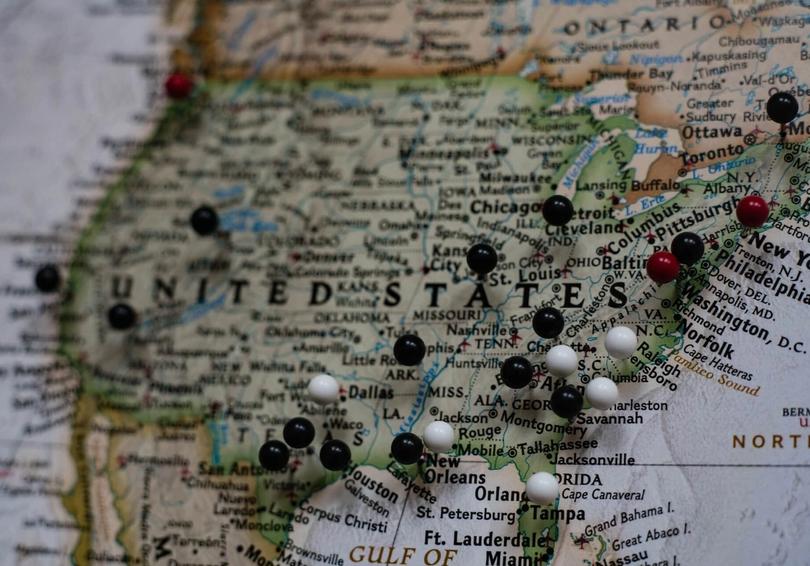
For a baseline on what shops are charging across major markets, see how prices compare across U.S. cities. Use it as the floor. Then build up.
The Four Inputs to Your Real Price
Most pricing decisions are made on one input: the local average. Real pricing decisions use four. Each one moves your price up from the floor.
1. Years Behind the Chair
Time in the craft is the single most undervalued input in barber pricing. A barber with fifteen years of experience is not delivering the same service as a barber with three, even if the cut looks similar from the outside.
Bonez, a shop owner who's been in the chair for nearly two decades, puts it to new clients like this:
"You're not paying for a haircut, you're paying for 18 years of knowledge."
It lands because it's accurate, and it reframes the price conversation before it starts.
The simplest test: pull up your menu. If your most experienced barber and your newest barber charge within five dollars of each other, your menu is broken.
2. Your Retention Rate
Your rebook rate is one of the clearest pricing signals you have.
Here's why. A 70% rebook rate means seven out of ten clients chose your price the second time. They voted. A 40% rebook rate means more than half walked. Pricing is rarely the reason they left, but it's also not the lever that brings them back.
Retention is evidence of pricing room. High retention is a green light to raise. Low retention is a signal to fix the leak first, because raising prices on a leaky bucket empties it faster.
The benchmarks below are directional, and they assume you have at least 12 months of data. At 65% rebook rate and above, you have pricing room. Raise on your strongest service first. Between 50% and 65%, raise small at five to seven percent on one service and watch the rebook rate hold. Below 50%, work the retention problem before you touch the menu.
3. Your Edge
What do you do that no one in a five-mile radius does as well?
Maybe it's beard work. Maybe it's a fade you've spent ten years sharpening. Maybe it's a hot towel and straight razor finish that turns a $40 cut into a $70 experience. Maybe it's that you book on time, every time, and the shop is spotless.
The edge doesn't have to be technical. Reliability is an edge. Cleanliness is an edge. Predictability is an edge.
Angel, a shop owner who built his pricing around scarcity, frames it this way:
"Sneakers only resell when they sell out. You can't go on StockX and get a pair that's still on the shelf at the Foot Locker locally."
Scarcity sets the price. If your chair is full and the next opening is two weeks out, your chair is scarce. Price accordingly.
4. The Cost of Not Raising Prices
Here's the input most owners skip. What is it costing you to charge what you charged in 2023?
Rent went up. Product went up. Booth fees went up. Your barbers' rent and groceries went up. The dollar your shop earns today buys less than the dollar it earned two years ago. If your prices haven't moved, your shop is taking a pay cut every twelve months without anyone clocking it.
A two-dollar gap on a $40 service, multiplied across every chair in your shop, every day, for a year, is real money walking out the door.
Dom, who scaled from one shop to three in eight years in Northeast Philadelphia, says it plainly:
"Stop being lazy. Charge more, work more, make more."
That's the math, plain and simple. Higher prices, higher take, same chair.
How to Raise Prices Without Losing Your Book
The fear of a price increase is bigger than the impact of one. Most shop owners overestimate how many clients will leave and underestimate how many were ready to pay more.
Raising prices is a business decision. The fear around it is emotional. Don't let the second one make the first one for you.
Here's the framework:
Give thirty to sixty days of notice. A price change posted on a Tuesday for that Saturday feels like a stick-up. The same change announced four weeks out feels like a business decision.
Tell people why, briefly. Not an essay. Two sentences in a text, an Instagram post, or a chair-side comment. Reference what's improved (chair upgrades, training, hours, faster booking) so the price increase ties to value clients can see.
Honor existing standing appointments at the old rate for one cycle. This is the move that turns a price increase into a thank-you instead of a stick-up. The client books the next one at the new rate without feeling caught off guard.
Don't raise everything at once. Lead with the services where your edge is strongest. Hold the rest steady. Test the response, then move to the next tier.
The shops that do this rarely see meaningful client loss. The ones who do lose clients usually find out the lost clients were already on the way out for reasons that had nothing to do with the price.
For the underlying mechanics on how to think about your starting price, see barbershop pricing fundamentals.
How to Know If It's Working
A price change is a financial experiment. Track the result the way you'd track any experiment.
Three numbers tell you everything inside thirty days:
- Revenue per chair, week over week. If revenue is up despite a small drop in volume, the increase is working.
- Rebook rate. If clients are still booking the next one at the new price, you have your answer.
- No-show rate. If it spikes, the cause is usually how the change was communicated, not the price itself. Fix the message before you touch the number.
This is exactly what Reporting Assistant powered by SQUIRE AI is for. Ask 'how did my revenue per chair change after I raised prices in July' and you get the answer from your own data in seconds, no spreadsheet required.
FAQs
The Move
The shops that grow charge for what they bring to the chair. Not what the shop down the street charges. Not what they charged three years ago. What the work is worth right now, to the clients sitting in front of them.
If you've been thinking about a price increase for six months, that's six months of pay you've left on the table.
Pull your numbers. Pick the service where your edge is strongest. Raise it five to ten percent. Tell clients clearly. Watch what happens.
See what SQUIRE reports can tell you about your shop's pricing performance
Ready to try SQUIRE?